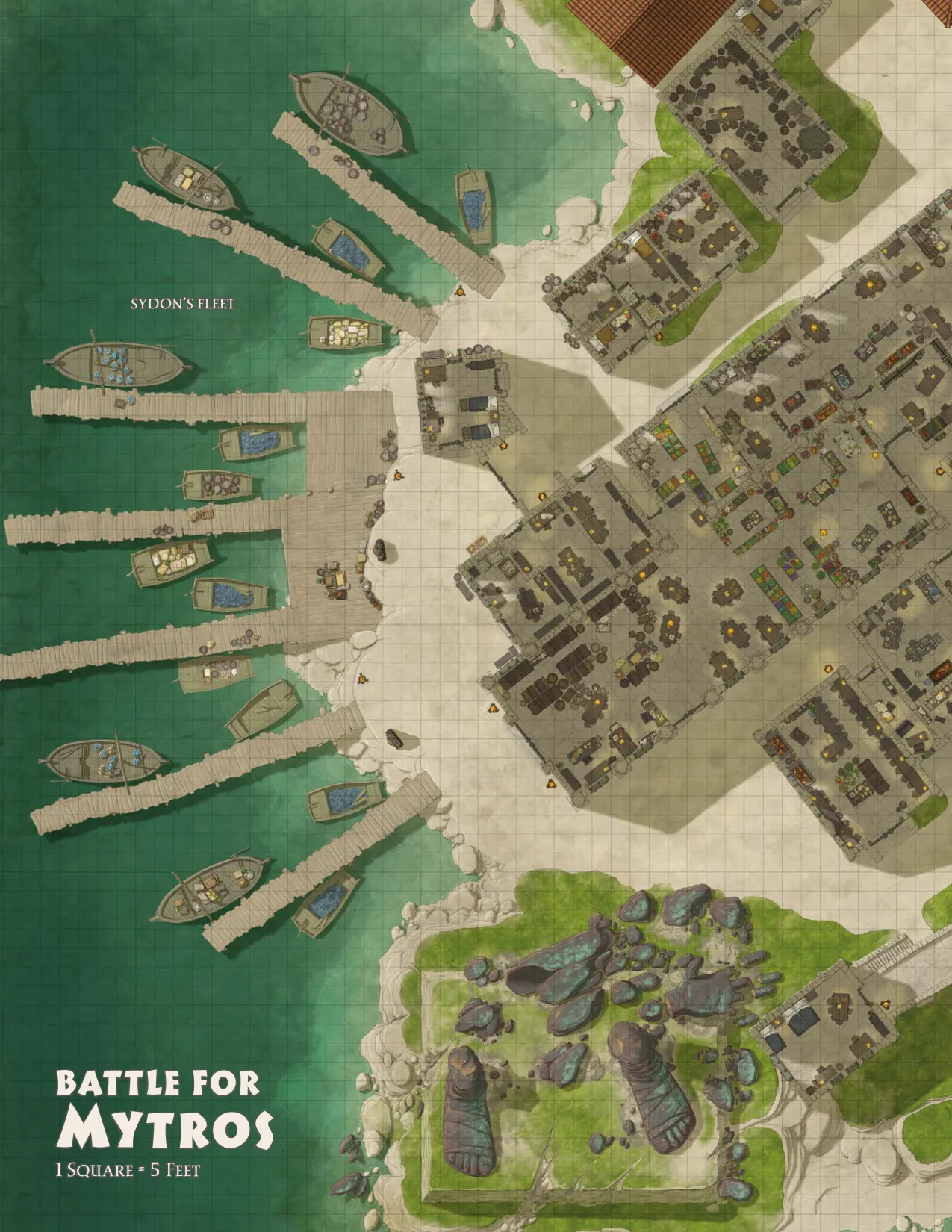
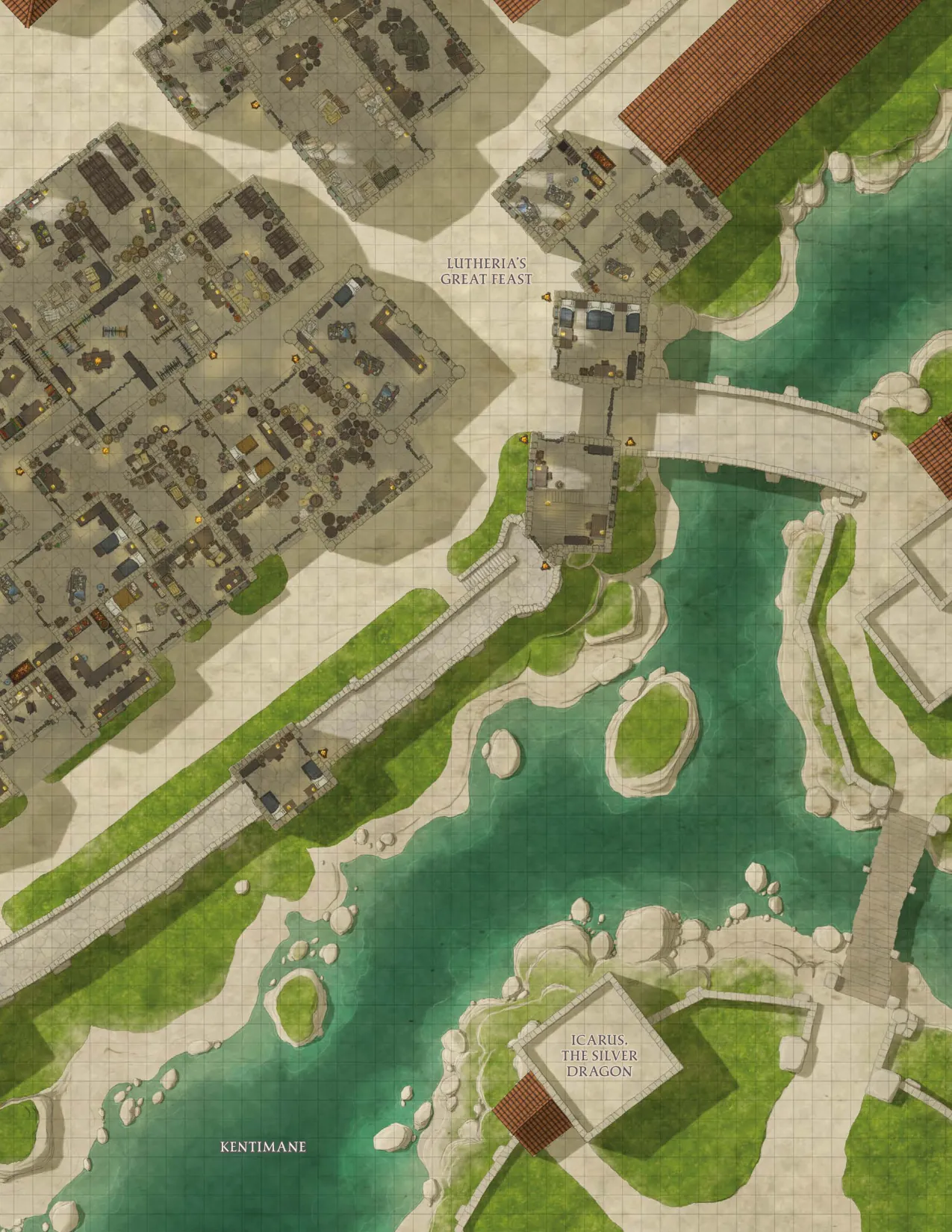
Return to Mytros#
Once the heroes have bonded with the four metallic dragons, they may take flight and return to Mytros. When the party arrives, they discover a cataclysm: Mytros is consumed by chaos, and King Acastus has only worsened the many dangers that threaten the city.
Running the Battle#
The Battle of Mytros unfolds as a series of epic conflicts, each of which may be triggered if certain conditions have been satisfied. Before you start this part of the adventure, use the Epic Conflict table to determine which epic conflicts should occur. The conflicts should be run in sequential order as presented below.
There is no pause between each of these epic conflicts. Events are now spinning out of anyone’s control. The heroes will not have a chance to short rest between encounters. At most, they have a few minutes to use healing potions and spells before the next major threat begins
to unfold. This sequence of events should completely exhaust the heroes, and it should require them to expend just about every resource that they’ve accumulated so far in the adventure.
Fighting Alongside Dragons#
The players should be given control of their bonded dragons. To keep battles moving quickly, have each dragon act on the same initiative as the hero riding it. Sydon, Lutheria, and Kentimane should target the dragons first. This is a climactic battle that heralds a new age for Thylea—you should allow for the possibility that one or more of the dragons may be killed during these events.
Signs of Conflict#
Once the heroes reach Mytros, they witness signs of multiple active conflicts and events. Use the Conflict Foreshadowing table to create a sense of constant pressure throughout this series of encounters.
For example, if Kentimane is coming, then you should tease the arrival of the Titan by having earthquakes occur with increasing severity. Kentimane’s approach should be terrifying, as his footsteps shake the world.
Rescuing Citizens#
Kyrah, Pythor, Volkan, and Vallus are torn between loyalty to the heroes and their desire to protect the city and its people. Each time the players undertake one of the conflicts, two of the dragons will ask to go to the aid of the people of the city.
If the dragons go rescue citizens, the heroes will not have their services in the next conflict. However, in exchange for this show of mercy and bravery, the goddess Mytros will grant blessings to the heroes that last for the duration of this part of the adventure. The Heroic Blessings table shows which blessings the heroes receive upon rescuing citizens during the various epic conflicts. Any dragons that have been sent away will return before the next conflict begins.
Splitting the Party#
Depending on your heroes’ abilities, and your own comfort in running two separate events at the same time, you may allow your players to split the party and tackle two conflicts at once. For example, half the party might take two dragons to confront Acastus (in The False Dragonlord) while the other half of the party takes two dragons to confront Sydon (in The Armies of Sydon). Splitting the party like this counts as rescuing citizens in both conflicts; therefore, the party should be rewarded with both of the associated blessings from Mytros.