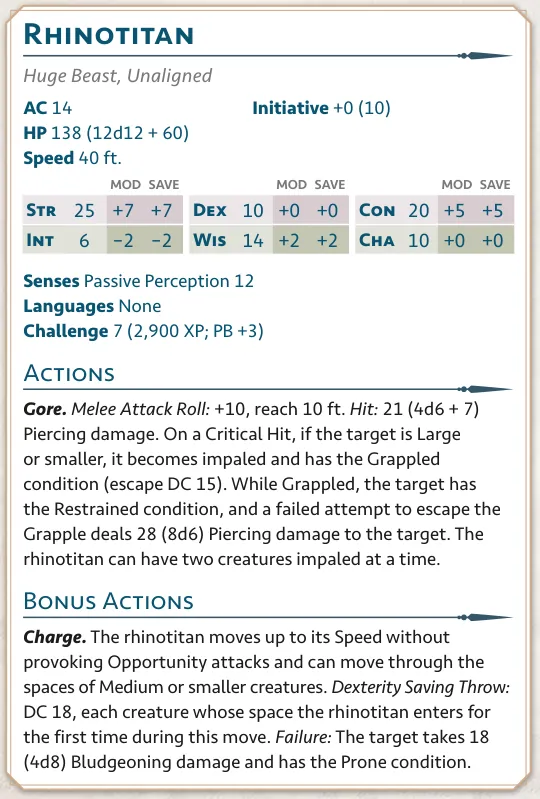
Among the greatest beasts to walk the lands of Thylea, the rhinotitan is a colossal horned giant. Towering nearly fifteen feet at the shoulder and longer than many riverboats, its immense frame is supported by pillar-like legs. Its thick hide bears the scars of age and hardship, while its long, sharp horn serves as a brutal weapon against anything reckless enough to challenge it.
Family Herds#
Rhinotitans roam the northern plains in small family groups, typically consisting of a mated pair and their offspring. These herds follow ancient migration routes that may take decades to complete, carving enduring paths into the land. Though not aggressive by nature, their presence alone establishes dominance. Lesser beasts scatter at their approach, and even apex predators avoid their territory rather than risk destruction.
Unstoppable#
When roused to anger, the rhinotitan becomes a force of devastation. When the creature charges it is able to trample almost anything it encounters beneath its feet. If needed, it can use its horn to devastating effect
Shapers of the Land#
Despite the danger, rhinotitans play a vital role in the balance of the plains. Their migrations clear land, open water sources, and create fertile ground for new growth. Some centaur tribes believe these creatures were shaped by the titans themselves, and on rare occasions will undertake ritual hunts, offering the fallen rhinotitan as a sacrifice in hopes of earning divine favor. Such acts are undertaken only in desperation, for the death of a rhinotitan is never without consequence



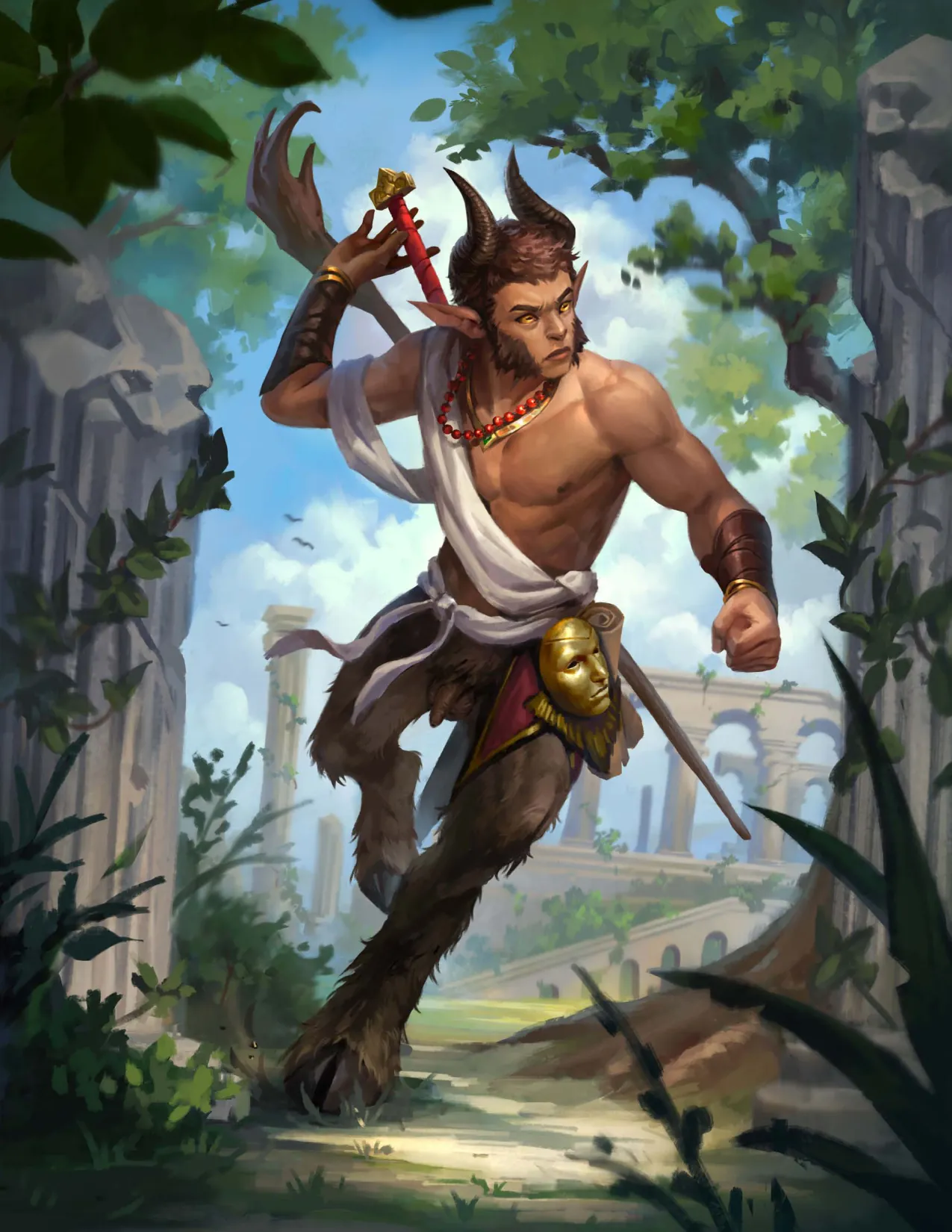
Satyrs are fey creatures of wild spirit and insatiable curiosity, drawn to the sensory wonders of both the natural world and mortal civilization.
Goat-Men of the Wild#
A satyr is easily recognized by their goat-like lower body, thick fur, and curling horns that range from stubs to great mountain arcs. Their upper body resembles that of an elf, though hair often grows wild across their arms and torsos. Some take pride in their untamed appearance, while others shave meticulously for style or seduction. Their coloration varies widely, from pale to deep earth-toned skin and fur in every natural shade.
Unshackled Emotion#
To a satyr, the world is a banquet of feeling. Joy, sorrow, fury, love—they want to taste it all. This makes them thrilling companions, dangerous lovers, and unpredictable allies. The only thing a satyr fears is boredom, and they’ll do anything to avoid it.
Satyrs in Thylea#
Unlike centaurs, satyrs maintain a surprisingly cordial relationship with the mortal species of Thylea. Yet suspicion clings to them. Tales abound of satyrs seducing noble daughters, whispering dark dreams to lonely scholars, or leading shepherd boys into the woods, never to return. Whether those stories are true is left for each bard to decide.
Satyr Minstrels#
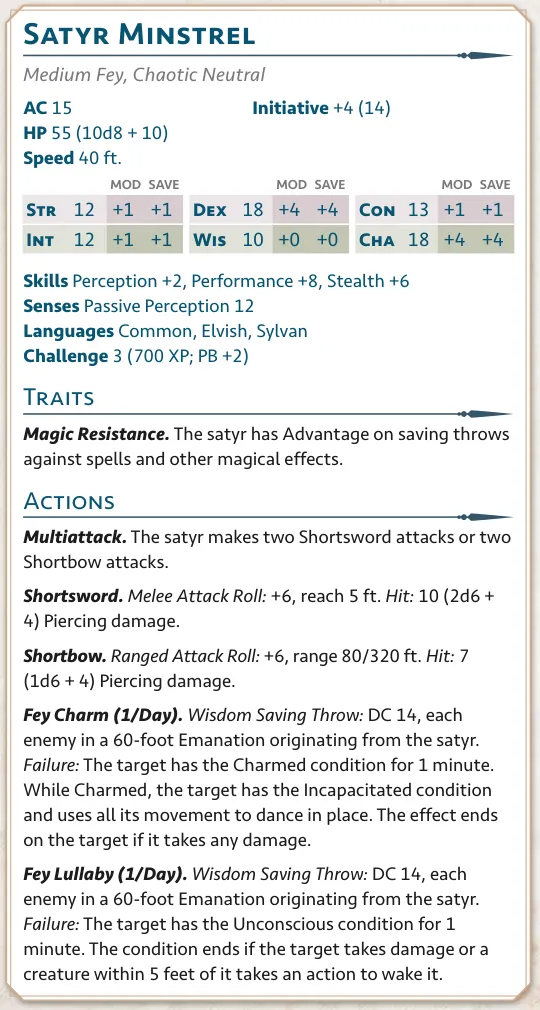
Music is the heart of satyr life. Their flute can calm beasts, charm travelers, or lure the unwary into twilight revels that stretch for days. Satyrs travel far to hear rare songs and are known to compose melodies that stir even the hearts of gods. Some have spent years traveling the mortal world to learn various ways to enhance their magical songs.