The Primal Powers#
These beings are not gods in the traditional sense, but their impact on Grimnir’s creation and evolution is undeniable. Their presence is felt in the bones of the world, their legacies woven into its fate.
Boða, the Last of the Yoten#
Though long dead, Boða’s shadow looms large. Her legacy of ruin serves as a grim reminder that even a single being can bring the world to its knees. Fear of the Yoten keeps Grimnir’s people ever watchful. Anything that bears their mark is swiftly destroyed, for vigilance is survival, and the memory of Boða burns hotter than fire.
Hel, the Lady of the Dead#
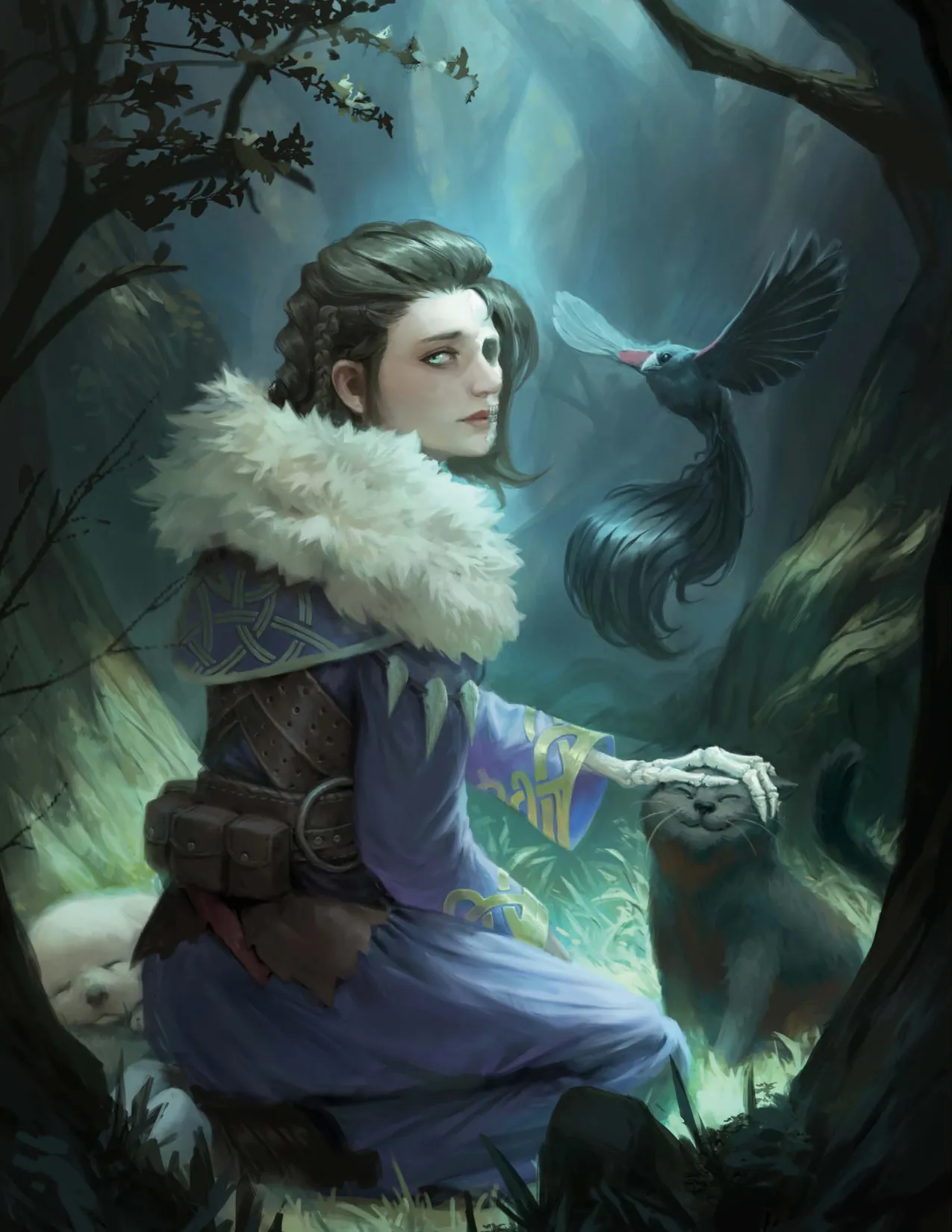
Thonir’s lost love, Hel now rules the Underworld. She is rarely worshipped and often feared, but she is not cruel. Her compassion lies in ending pain permanently. To Hel, death is mercy, and the Underworld a sanctuary where suffering cannot follow. But in her cold refuge, there is no joy, only the absence of agony. Those who claim to have glimpsed her realm speak of a woman consumed by sorrow, her heart still mourning Thonir.
Thonir, Son of Aldyhn#
Once deceived, Thonir redeemed himself in blood, slaying Boða and breaking the Rainbow Spear. Now he watches from the Halls of the Slain, far above Grimnir. There he trains and feasts with the honored dead, waiting for the day he is called again. He is the guardian of the valkry; the winged warriors who carry fallen raiders to glory.
Mirgal, the Betrayer and Architect#
Once a Vanir, Mirgal sought power above all. His betrayal shattered the old world, and though he never intended it, his essence became the seed of Grimnir itself. Through Aldyhn’s spell and his own demise, he gave birth to a new realm. Though his body is gone, Grimnir still reflects the man he was; brilliant, dangerous, and unforgettable.
The Stone Court#
The people of Grimnir worship the Vanir and their divine offspring as gods, though these deities are no longer free to walk the world. Bound in stone at the dawn of Grimnir’s age, they remain trapped as living statues. These statues stand silent and unmoving atop the sacred peak of Turnfjall. Though they cannot act directly, their influence lingers in visions, omens, and fate.
Every raider hearth bears a simple effigy of one of these gods, woven from wool or cloth and placed near the fire. Families carry these effigies on their travels, believing they invite their patron’s subtle protection or guidance when needed most.
The Stone Court itself is said to sit beside a vast, glacial lake high atop Turnfjall, a place shrouded in storms. Since the gods were entombed, the lake has gained a reputation as a lair of monsters. Only a handful of expeditions have dared to seek it in recent generations. None have returned.
Aldyhn, Goddess of Wisdom#
Once the leader of the Vanir, Aldyhn carries the burden of old guilt. She lost her husband, her kin, and her home in the war that birthed Grimnir. To atone for her blindness to Mirgal’s betrayal, she gave one of her eyes to the Well of Wisdom. Some say this made her blind to her son Thonir’s own tragic misstep. Others claim it granted her true foresight; that she became the first of the völv, seeing all that was to come, even Ragnarök. Of all the members of the Stone Court, she is the most active, her white ravens still seen delivering signs and omens to the living.
Gnark and Idin, The Twins#
Born in battle and bonded in blood, the twins lost their mother’s enchanted weapon during the Exodus. To overcome this loss, they devised a twin-fighting style. Now, while each is a formidable warrior alone, they are unstoppable together.
Gnark: God of Fields, watches over the harvest and rural clans.
Idin: Goddess of Forges, is revered by smiths and builders.
Knat, Goddess of Contests#
Broad-shouldered and fierce, Knat was always the first to charge into danger. She reveled in friendly competition and remains the patron of sports, trials, and duels among the clans. Her name lives on in the Knattle clan, who uphold her ideals of courage, fairness, and joyful rivalry. She is invoked before contests and war alike.
Luta, Goddess of Will#
The youngest Vanir, Luta grew strong while walking her own path. Overshadowed by her bonded siblings, she honed her craft alone, becoming a deadly warrior without boasting or pride. She loved Thonir in silence yet never spoke her heart. During the gods’ downfall, she had wandered from the others, eating her apple alone. Though her statue remains lost, her priests still wield divine power, proof that she endures. The nomadic Lutans carry her legacy, favoring quiet strength and ruthless efficiency over grandstanding or flair.
Palter, God of Hope#
Once the most radiant of the Vanir, Palter was an elf cleric clad in shining mail, a winged helm atop his brow. During the Exodus, a yoten in wolf form struck him down, but he was carried to safety by Vani and Luta. Though he survived, he was left grievously scarred across face and chest. Yet his light never dimmed, with his warmth, and unshakable optimism becoming his true beauty. Palter is prayed to in times of despair, especially by the wounded and the forgotten.
Vani, God of Battle#
A towering figure among the Vanir, Vani wielded the Greatsword Cullen, said to cleave even yoten in half. He is central to many of the old battle songs. He is strength made flesh, loyalty bound in steel. His worship endures among the Risa, the tallfolk clans, who strive to embody his might and valor in battle. Where Vani is invoked, few dare flee the field. Runestone